Showing posts with label evolution. Show all posts

Monday, February 7, 2022

God Isn't In the Driver's Seat (or, If Evolution Is True, What Do We Do With God?)


            I sort of believe in the theory of evolution like I sort of believe in the theory of gravity. Think about it. That means evolution is not up for discussion. But while the theory of gravity bores me, unless I’m falling, the theory of evolution fascinates me.


            Here’s why. I went to Toronto District Christian High, in Woodbridge, as a teen. Unlike many Christian schools, at Toronto Christian we were taught about evolution. We were taught, in fact, that evolution was how God probably created the universe. This is called theistic evolution.


            However, there was a single exception. Humans. According to my teachers humans were sinless special creations God made in his image a few thousand years ago. We were not part of the animal kingdom. We did not evolve. 


            This was pretty much the line I was taught at seminary, too. After seminary, I spent a year of graduate study digging deeper, comparing the Bible’s several creation stories to similar older creation stories like the Babylonian Enuma Elish, a creation and flood story told by ancient Israel’s neighbors. I learned that the stories in the Bible seemed to be very intentional, shabbat-night-live satiric commentaries on the more ancient creation stories of Israel’s neighbours. 


            Since then, studying human evolution has become a hobby. And one of the reasons I finally left my previous denomination was because I couldn’t, finally, pretend to play along with my denomination’s official view that the Genesis myths were actually real history.


            More recently, scientists have unraveled the human genome and the DNA within it. Doing so not only allows us to find relatives several generations removed through sites like 23andme’s DNA kits, but unravelling the human genome has helped us find criminals by the DNA they leave behind, and now even cure some diseases rooted in genetic problems. Within that genome, we’ve also discovered the deep evolutionary roots of humankind that ties us to the rest of the animal kingdom. We humans evolved from other earlier hominids, as have the Great Apes and yes, even monkeys. We are also related to other branches of the homo species, like Neanderthals and Denosivans—both now extinct. 


            But why am I telling you all this? Because as I’ve studied cosmic and biological evolution, I’ve begun to ask myself, more and more, “so what role does God play in all this?” If everything evolved, and if science can describe that evolutionary process without needing a God, then what use is God?


            And this is what I came up with. It is tentative. It is the best I can do. And I am very, very open to better ideas.


            Imagine a car. The car loosely represents the cosmos. And imagine God. God can relate to the car in several ways. For example, perhaps God is the driver.


            That is, God gets behind the wheel. God has the key, turns the ignition, and gets the car going. God as driver is in complete control. God chooses the destination. He’s the driver, after all. God steers the car around every corner. In fact, God even built the car he drives—he’s a cosmic Henry Ford. This is how most conservative Christians think of God—he’s completely in charge of the whole cosmos—starting it, directing it, and so on. It’s why, when someone dies or they get a new job, such Christians will say things like, “well, it was God’s will. That’s God’s plan.”


            Prayer, then, could be imagined as us asking the driver, God, to steer the car in a certain way, and get us to places we want to go. But God is the driver. God might listen to us, as passengers, but God might not. God is completely in charge of our journeys. Nothing is up to us. In its most extreme of the Calvinist versions of this line of thought, God’s mind is never changed by prayer. God has already decided everything ahead of time. This is called predestination—God decides everything about the destination and our drive there. Humans don’t really have a choice. No free will.


            But many Christians (and people of other faiths) disagree. For example, some Christians imagine that God is not much like a driver, but more like a passenger in a self-driving car, a next-generation Tesla, say, that he (usually) invented and built. In this case, God provides the blueprint, gets things going, comes along for the ride, but doesn’t personally steer the car himself. This is called deism.


            Deists have their own favourite analogy. Imagine finding a watch in a field. You pick it up. You wind it up. And the watch ticks and tocks. It keeps time. Perfectly. 


            If you found such a watch, you would have to presume that it was made by someone. Watches don’t just appear, by accident, as it were. So, if you found a watch, you would have to believe that there was a skilled watchmaker who designed and manufactured it. 


            Well, when deists look about the cosmos what they see is something even more wonderfully and fearfully made than that watch. The planets in their circuits, our blood coursing through veins, and all the laws of nature suggested to these ancients that, as with the watch, the cosmos must have a designer and a manufacturer. But once a big bang sets it off, the cosmos runs by itself. God is inventor, creator, but once God is done, God lets the whole mess run itself. Deism. 


            I’m more inclined to a deist God than to a driver God who predestines everything. My problem with deism, however, is that modern theories actually can pretty much explain everything—the big bang, the appearance of life, evolution. The physical world doesn’t need an inventor or watchmaker to be properly explained. Which is why Richard Dawkins wrote a book about evolution called, ironically, The Blind Watchmaker. 


            Well, as you can see, if you don’t need God to create the cosmos and just come along for the drive, and if you don’t need God as the creator and driver either, there isn’t much room left for God. So, some Christians—liberal ones, for the most part, have begun to think of God not as the driver, not as a quiet passenger who just set things in motion, but as a backseat driver.


            You see, while science can explain a lot, some people don’t think science can explain morality, our human notions about what is right and wrong. And so, these Christians turn God into a backseat driver who is always telling us what is right and wrong, what direction to take our lives, which pedestrians and hazards to watch out for. This is a nagging God, a pushy God, a “you better get this right,” God. A liberal works-righteousness God who seems, always, to be saying, “Be better. Do more. Divest. Rally. Protest.” This God speaks to us insistently, mostly through theologians and denominational executives and pressure groups who are sure they know exactly what God wants when it comes to a whole list of contemporary issues. And while I often agree with these people, I don’t like the tone, and I don’t like the imagined God behind this tone, very much.


            None of these pictures of God ring true for me. Is there another possibility? I think there is. Perhaps God, in some wild but mysterious way offers guidance when we, alone in the car by ourselves, or together with each other as a community, seek that guidance. That is, instead of nagging us, perhaps God is more like Google Maps or the Waze app. Except those kinds of maps are too directive, too sure. So maybe God is more like the author of an old-fashioned paper map. We can unfold it and turn to it for direction, but we need to read it carefully, parse its options, interpret it, and rely on the corroborating (or not) advice of fellow passengers. Only when we turn to God “The Paper Map,” for direction do we receive it—in part and imperfectly. 


            But where might God provide such guidance, in real life? Well, I’d say that scripture is where we often—if not always!—find it; and in the cumulative wisdom we’ve built up about scripture as a community, over thousands of years. Scripture, and our reflection on it, is the divine roadmap we have for arriving (“perhaps,” says John Caputo. “We hope,” I add.) at our desired destination.


            I’m not saying that scripture is dictated by God, or that it is authoritative (so we better listen to it, or else!), or even that it is divinely inspired. But overall, scripture—including the scriptures of other religions and the Testament we received from the Jewish people—scriptures do represent thousands of years of deep listening on the part of humans to a mysterious divine wisdom that seems to permeate the cosmos and sometimes our own deepest selves, as well. God whispers, sometimes we hear, some of those who heard tried to write it down.


We argue about how to understand scripture, we question some of its odd suggestions that belong to another place and time, but overall, in scripture and in the communities that listen to it we are nudged along. In scripture we may find God gently, kindly, offering direction when we seek it, encouraging us to live full lives that benefit each other and help us find our place in the cosmos.


            Scripture in this sense is a lamp that prevents our feet from stumbling when all is otherwise dark (Psalm 119:105). Keep in mind that when scripture is described as a light, it isn’t talking about a modern flashlight or streetlight that reveals all. It is a flickering, uncovered olive-oil lamp with a sputtering wick that threatens to go out at any minute, and gives just enough light so that we don’t trip over what would otherwise be obvious rocks and chasms in the path. 


            Scripture is this sort of provisional and delicate divine gift. But gifts, to be true gifts, must be given unconditionally. There is no expectation of a return, no nagging about thank-you cards, no obligation to give something of equal or greater value back. If we were given a gift conditional on how we responded to it, it would be merely a financial transaction, a debt to be repaid, rather than a gift. We’d have to interpret it correctly, or else. But no. As a favorite writer of mine once put it: There is nothing you have to do, there is nothing you have to do, and there is nothing you have to do.


            The gift of scripture, written by humans, is an invitation, really, to explore meaning and purpose beyond our everyday matter-of-fact experiences. Science, and theories like evolution, explain a lot—everything, really. And yet, for such a world as this, we also have this one thing more, this ancient gift, this old map, for why and how to live a life—not just for survival, but for the love of all things bright and beautiful.

Saturday, December 12, 2020

My Ten Favourite Reads from 2020


          I find that the annual ten-best and hundred-best book lists are pretty boring. The lists have in common that they’re mostly made up of the same mass market bestsellers. I think there is a direct connection between the amount of marketing dollars the publisher spends and getting on these lists. These books are, by design, intended to have wide appeal, but that means many great “specialist” books and small press books get missed. So here is my very personal list—best books I’ve read in 2020, regardless of when they were published. 
          The list has several themes in common across the themes: religion, anthropology, and race(ism). Hope you find something here that you like!

NOVELS

1.
 Exit West, by Mosin Hamid. Such a unique and lovely narrative voice! I mean the writing! A melancholy and romantic book about what binds humanity together and what pulls us apart. Set in the Middle East and California, it follows a few characters who move around the world as doorways beyond the control of central governments makes the whole world’s population mobile. Magical realism here, and it works. 

2. Homegoing, by Yaa Gyasi. Lovely and painful. A narrative dive into the lives of ordinary people who both fail and triumph. Most of the failures are due to hatred—systemic racism—and war and colonialism and ignorance, among other human shortcomings. But the way these people keep the flames of hope and love alive is inspiring and beautiful. The unique structure of the novel is also very interesting, as it follows two joined yet separate families through multiple generations. The writing is simple, pointed, and lovely. Best read of the year.

3. The Overstory, by Richard Powers. Well, I can find things to criticize here. The book is a bit too preachy; it reads, sometimes, too much like a botany text; and it is really long and could have used a bit of trimming. Still, this is a magnificent book. Powers creates believable characters who do, at turns, lovely and horrible things to save the world’s trees. Powers hears and shares the language of trees so that I can almost hear them.

4. A Canticle for Leibowitz by Walter M. Miller, Jr. I read this postapocalyptic book in high school, again in college, and then not again till now. It is a book worth reading for its humanity, for its sympathetic portrayal of religious people (perhaps a bit too sympathetic) and for its grand historical sweep. I can't say I share all of Miller's Roman Catholic sensitivities, especially in light of so many recent revelations. But as a study of the complex interplay between religious conviction, civilization, and politics, it can’t be beat. 

MEDIA

5. Reader, Come Home: The Reading Brain in a Digital World, by Marryanne Wolf. The great irony that weighs against this book is that those who might gain the most by reading it never will. They’ve abandoned deep reading for the mesmerizing screen. Wolf is a neurologist who explains in great detail the latest research into why reading is becoming harder and harder for most people in our society. A must read for ministers, teachers, and parents too. Wolf’s specialty is child development.
          A fine companion book to Reader, Come Home, is Digital Mini-malism: Choosing a Focused Life in a Noisy World. After reviewing, briefly, much of the same material that Wolf describes in greater detail, and after explaining Silicon Valley’s corporate aims, Cal Newport offers a step-by-step guide to his media detox plan. I’m going to take it this January, when I begin my sabbatical!

AUTOBIOGRAPHY

6. Born a Crime: Stories of a South African Childhood, by Trevor Noah. As a regular visitor to South Africa, this book revealed, to me, just how much I've missed. I've been to the townships, both in the city and the countryside. I've visited Soweto, Cape Town, Johannesburg and many other towns. But I was always a tourist and I can see I missed mostly everything.
          This is a humane insider’s book about people trying to figure out a new thing with old prejudices and problems. They do better than you'd think, but it is quite a trip. Noah himself turns out to be a totally likeable, yet complex person. His mother? Well, she is a character who leaves me both impressed and sad. Read this. Surprises everywhere. Well written, too.

RELIGION AND PHILOSOPHY 
(or, Doubt and Evil)

7. Unbelievers: An Emotional History of Doubt by Alec Ryrie. A well-written, engaging story with many vignettes along the way. Ryrie argues that as impressive as rational arguments for and against the existence of God might be, most people have become unbelievers for emotional reasons. 
          Ryrie names two that have ancient historical roots: anger (especially at religious institutions, rather than at God) and anxiety (especially surrounding how one can know this or that, given the many opinions out there). I thought his concluding analysis of our society’s turn away from church a bit weak, but for the most part a well-researched and engaging attempt to listen for faith voices other than those of the scholars.

8. Eichmann in Jerusalem: A Report on the Banality of Evil, by Hannah Arendt. I made a goal of reading ten classic works this year. Right now, I’m plowing through Dostoevsky’s Brothers Karamazov. Arendt’s book, I’m finding, is a fitting companion to Dostoevsky. 
          She examines the life and trial of Adolf Eichmann in order to try and understand what made him send so many Jewish persons, by rail, to their deaths during World War II. Arendt doesn’t think it was the devil. Her portrait of a man unselfconsciously stumbling into evil is disheartening and important—especially now, as nations around the world sees more and more strong men taking power and their sycophants helping smooth the way.

SCIENCES

9. Ancestors in Our Genome: The New Science of Human Evolution, by Eugene E. Harris. Human evolution has always been a fascination of mine. I sometimes think that career-wise, my greatest regret is that I didn’t become an evolutionary anthropologist.
          The genomic science is challenging for a lay person like me. But the subject is truly fascinating. We all know how DNA can be used to identify certain illnesses, potential relatives, criminals, and even rapists. DNA is a powerful tool for tracing our relationships to and contacts with others. But the same science and tools can be used to determine our evolutionary relationships too. This book covers when the homo sapiens line diverged from the last common ancestor of our us and our cousins, chimps and bonobos. It covers why we know that humans mostly evolved in Africa, and how we are related to other human species that are now extinct, including Neanderthals, Denisovans, and even earlier humans. I loved it.
          Runner up in the evolutionary biology category was Kindred: Neanderthal Life, Love, Death and Art, by Rebecca Wragg Sykes. The title says it all. A marvellously detailed (perhaps a bit too detailed) look at many Neanderthal archeological sites and what we can learn from them.

10. In a different corner of the anthropological world, I was completely absorbed by At the Bridge; James Teit and an Anthropology of Belonging, by Wendy Wickwire. James Teit was an overlooked, turn-of-the-nineteenth century anthropologist who lived with, studied, and advocated for the indigenous peoples of British Columbia and Northwest USA. 
          Wickwire examines Teit’s life, his participant-observer stance among the First Nations, his political engagement with Ottawa and Victoria, and his understanding of the systemic racism First Nations consistently faced. Every page is filled with fascinating stories and insight.

Monday, February 25, 2019

Evolution Is a Theory Like Gravity Is a Theory. But What About God?


         I sort of believe in the theory of evolution like I sort of believe in the theory of gravity. Think about it. That means evolution is not up for discussion. But while the theory of gravity bores me, unless I’m falling, the theory of evolution fascinates me.
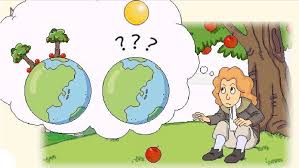
Sir Isaac Newton hypothesizes the Theory of Gravity

         Here’s why. I went to Toronto District Christian High, in Woodbridge, as a teen. Unlike many Christian schools, at Toronto Christian we were taught about evolution. We were taught, in fact, that evolution was likely how God created the universe. This is called theistic evolution.

         However, there was a single exception. Humans. According to my teachers humans were sinless special creations God made in his image. We were not part of the animal kingdom. We did not evolve. 

         This was pretty much the line I was taught at seminary, too. After seminary, I spent a year of graduate study digging deeper, comparing the Bible’s several creation stories to similar older creation stories told by ancient Israel’s neighbours. I learned that the stories in the Bible were very intentional, shabbat-night-live satiric commentaries on the more ancient creation stories of Israel’s neighbours. 

         Since then, studying human evolution has become a hobby. And one of the reasons I finally left my previous denomination was because I couldn’t, finally, pretend to play along with my denomination’s official view on human evolution.

         More recently, scientists have unraveled the human genome and the DNA within it. Doing so not only allows us to find relatives several generations removed through sites like 23andme’s DNA kits, but unravelling the human genome has helped us find criminals by the DNA they leave behind, and now even cure some diseases rooted in genetic problems. Within that genome, we’ve also discovered the deep evolutionary roots of humankind that ties us to the rest of the animal kingdom. We humans evolved from other earlier hominids, as have the Great Apes and yes, even monkeys. We are also related to other branches of the homo species, like Neanderthals and Denosivans—both now extinct. 

         But why review all this? Because as I’ve studied cosmic and biological evolution, I’ve begun to ask myself, more and more, “so what role does God play in all this?” If everything evolved, and if science can describe that evolutionary process without needing a God, then what use is God?

         And this is what I came up with. It is tentative. It is the best I can do. And I am very, very open to better ideas.

         Imagine a car. The car loosely represents the cosmos. And imagine God. God can relate to the car in several ways. For example, perhaps God is the driver.

         That is, God gets behind the wheel. God has the key, turns the ignition, and gets the car going. God as driver is in complete control. God chooses the destination. He’s the driver, after all. God steers the car around every corner. In fact, God even built the car he drives—he’s a cosmic Henry Ford. This is how most conservative Christians think of God—he’s completely in charge of the whole cosmos—starting it, directing it, and so on. It’s why, when someone dies or they get a new job, such Christians will say things like, “well, it was God’s will. That’s God’s plan.”

         Prayer, then, could be imagined as us asking the driver, God, to steer the car in a certain way, and get us to places we want to go. But God is the driver. God might listen to us, as passengers, but God might not. God is completely in charge of our journeys. Nothing is up to us. In its most extreme of the Calvinist versions of this line of thought, God’s mind is never changed by prayer. God has already decided everything ahead of time. This is called predestination—God decides everything about the destination and our drive there. Humans don’t really have a choice. No free will.

         But many Christians (and people of other faiths) disagree. For example, some Christians imagine that God is not much like a driver, but more like a passenger in a self-driving car, a next-generation Tesla, say, that he invented and built. In this case, God provides the blueprint, gets things going, comes along for the ride, but doesn’t personally steer the car himself. This is called deism.

         Deists have their own favourite analogy. Imagine finding a watch in a field. You pick it up. You wind it up. And the watch ticks and tocks. It keeps time. Perfectly. 

         If you found such a watch, you would have to presume that it was made by someone. Watches don’t just appear, by accident, as it were. So, if you found a watch, you would have to believe that there was a skilled watchmaker who designed and manufactured it. 

         Well, when deists look about the cosmos what they see is something even more wonderfully and fearfully made than that watch. The planets in their circuits, our blood coursing through veins, and all the laws of nature suggested to these ancients that, as with the watch, the cosmos must have a designer and a manufacturer. But once a big bang sets it off, the cosmos runs by itself. God is inventor, creator, but once God is done, God lets the whole mess run itself. Deism. 

         I’m more inclined to a deist view of God myself, than to a driver God who predestines everything. My problem with deism, however, is that actually, modern scientific theories can pretty much explain everything—the big bang, the appearance of life, evolution. The physical world doesn’t need an inventor or watchmaker to be properly explained. Which is why Richard Dawkins wrote a book about evolution called, ironically, The Blind Watchmaker. 

         Well, as you can see, if you don’t need God to create the cosmos and just come along for the drive, and if you don’t need God as the creator and driver either, there isn’t much room left for God. So, some Christians—liberal ones, for the most part, have begun to think of God not as the driver, not as a quiet passenger who just set things in motion, but as a backseat driver.

         You see, while science can explain a lot, some people don’t think science can explain morality, our human notions about what is right and wrong. And so, these Christians turn God into a backseat driver who is always telling us what is right and wrong, what direction to take our lives, which pedestrians and hazards to watch out for. This is a nagging God, a pushy God, a “you better get this right,” God. A liberal works-righteousness God who seems, always, to be saying, “Be better. Do more. Divest. Rally. Protest.” This God speaks to us insistently, mostly through theologians and denominational executives and pressure groups who are sure they know exactly what God wants when it comes to a whole list of contemporary issues. And while I often agree with these people, I don’t like the tone, and I don’t like the imagined God behind this tone, very much.

         None of these pictures of God ring true for me. Is there another possibility? I think there is. Perhaps God, in some wild but mysterious way offers guidance when we, alone in the car by ourselves, or together with each other as a community, seek that guidance. That is, instead of nagging us, perhaps God is more like Google Maps or the Waze app. Except those kinds of maps are too directive, too sure. So maybe God is more like the author of an old-fashioned paper map. We can turn to it for direction, but we need to read it carefully, parse its options, interpret it, and rely on the corroborating (or not) advice of fellow passengers. Only when we turn to God “The Paper Map,” for direction do we receive it—in part and imperfectly. 

          But where might God provide such guidance, in real life? Well, I’d say that scripture is where we find it; and in the cumulative wisdom we’ve built up about scripture as a community, over thousands of years. Scripture, and our reflection on it, is the divine roadmap we have for arriving ("Perhaps," says John Caputo. “We hope,” I add.) at our desired destination.

         I’m not saying that scripture is dictated by God, or that is divinely authoritative (so we better listen to it!), or that every word is inspired. I don’t think so. But overall, scripture—including the scriptures of other religions and the Testament we received from the Jewish people—scriptures do represent thousands of years of deep listening on the part of humans to a mysterious divine wisdom that permeates the cosmos and is deeply rooted in our own selves, as well. We argue about how to understand scripture, we question some of its odd suggestions that belong to another place and time, but overall, in scripture and in the communities that listen to it and truly seek guidance in it, we usually find God gently, kindly, offering direction when we seek it, encouraging us to live full lives that benefit each other and help us find our place in the cosmos.

         Scripture in this sense is a lamp that prevents our feet from stumbling when all is otherwise dark (Psalm 119:105). Keep in mind that when scripture is described as a light, it isn’t talking about a modern flashlight or streetlight that reveals all. It is a flickering, uncovered olive lamp with a sputtering wick that threatens to go out at any minute, and gives just enough light so that we don’t trip over what would otherwise be obvious rocks and chasms in the path. 

         Scripture is a divine gift. But gifts, to be true gifts, must be given unconditionally. There is no expectation of a return, no nagging about thank-you cards, no obligation to give something of equal or greater value back. If we were given a gift conditional on how we responded to it, it would be merely a financial transaction, a debt to be repaid, rather than a gift. We’d have to interpret it correctly, or else. But no. As a favourite writer once put it: There is nothing you have to do, there is nothing you have to do, and there is nothing you have to do.

         The divine gift of scripture is an invitation, really, to explore meaning and purpose beyond the facts. Science, and theories like evolution, explain a lot—everything, really. And yet, for such a world as this, we also have this one thing more, this divine gift, the divine (but often obscure!) map, for why and how to live a life—not just for survival, but for the love of all things bright and beautiful.

Monday, February 20, 2017

The Best of What I Read in 2016


            I keep lists: of ancestors, of sermons I’ve preached, of places I’ve been to, and of books I’ve read. I am not sure why lists appeal to me, but when the time comes to reminisce they are handy for jogging my memory. I track my books on Goodreads.com. And so, without further ado, here are the books I read in 2016 that I don’t want to forget.

            Where We Came From: My ongoing fascination with human evolution was enriched by Svante Pääbo’s Neanderthal Man: In Search of Lost Genomes. Pääbo’s book is a memoir about how he fell in love with genomics, and how his team eventually became the first to sequence the Neanderthal and Denosivan genomes. While the book does get a bit technical from time to time, Pääbo is able, for the most part, to describe the science in terms understandable to lay people.
The inside look at the politics of science is a reminder that Washington and Ottawa are not the only places to find politics. The book feels, in some ways, like a road trip where you know the destination and can’t wait to get there. Hands down, the best science book I’ve read in years—and I’ve read quite a few.

            Science Fiction! Several of my favorite books were science fiction. Two African American women writers were my hands down favorites. The first was N. K. Jemisin, who wrote, The Fifth Season trilogy. The first book in the trilogy is The Broken Earth. Her books encouraged me, as a reader, to reconsider systemic racism and personal prejudice by making the point of contention not skin color, but unique but not widely-shared human gifts and skills. The turns of plot are both surprising and believable, the Earth Jemisin creates is detailed and exotic, and the key characters are well-developed.

            The other author—perhaps the best I read all year—was Nnedi Okorafor. Her novella Binti reminded me, a bit, of Margaret Atwood at her best as a stylist—as when Atwood’s poetic chops spill over into her prose. Okorafor’s writing is also near-poetic and subtly engages all of the reader’s senses with compelling descriptions of characters, their looks, their smells, and their families. I’m looking forward to reading the Novella’s full-length follow up, which was published in late January, 2017.

            Modern Media Tech and Its Casualties. My PHD was in Speech Communication, and during those studies I became fascinated with how different speech, reading and writing arts and technologies demand different kinds of intellectual equipment. People in oral societies with low literacy develop fascinating ways of communicating via spoken word and other media that are quite different from societies where books are front and centre. High literate societies, on the other hand, are very different than those where screens predominate. I explore this in my own book, Not Sure.        
            Adam Gazzaley’s The Distracted Mind: Ancient Brains in a High-Tech World is pure gold for parents, teachers, preachers, and university students who want to understand what is going on in their brains, and the brains of their wired audiences. I found the book’s structure—one half given over to neuroscience, and the other half to explaining its consequences—a bit off-putting. And the book is dense. But the effort it took to read was richly rewarded with deepened understanding of a technological change that is still sweeping over us. A good companion to Daniel Kahneman’s Thinking, Fast and Slow and a look under the brain’s hood for those who want to understand why it is that we entertain ourselves to death.

            Behind the Trump Phenomenon: Two books that provided very helpful background for understanding Trump’s victory and white Evangelical Christian support for him were Nancy Isenberg’s White Trash: The 400-Year Untold History of Class in America and Robert Jones' The End of White Christian America. Isenberg focusses on how America was built on the backs of poor immigrants such as indentured servants, jail parolees, as well as slaves. She traces out the generational poverty of this sort of deep-family-history, and it isn’t pretty. Jones shows how the structures of Christian religion, both mainline and conservative, have often worked against racial justice, inclusiveness, and an honest appraisal of why things are the way they are.


            Memoirs: When Breath Becomes Air is a memoir of the author’s long illness with cancer, up to just before his death. Paul Kalanithi is a neurosurgeon struggling to finish his residency and keep his marriage afloat. He’s a good man and his story, as sad as it ends, is also inspiring. I was fascinated by the role religion played in his life, even though he doesn’t dwell on it. With several doctors in my own extended family, the description of the grind Paul had to go through as a resident was sobering and sad. But I came to love this man, even if only from a great distance.
            Stefan Hertmans wrote an inventive memoir about his grandfather titled War and Turpentine. I was impressed and often moved by the way Hertman’s described the social and familial traps his grandfather had to navigate. The grandfather’s diary of his time as a soldier in Flanders Fields serves as the non-fiction basis for this book. But Hertman then adds his own fictional gloss to the story in order to make a truer portrait rise and shine. The aching pains from long ago that marked his grandfather’s life is given great prominence here, and encourages all readers to be sensitive to the hurts they or others struggle with too. The book includes some very compelling descriptions of First World War battles, as well.

            Written in English: As an old English major, I’ve always been fascinated by the history of English—and by extension, the evolution of language. John McWhorter’s Our Magnificent Bastard Tongue: The Untold History of English focusses on the impact of Celtic and Norse grammars on English grammar, and the reasons why this sort of influence is often missed in “history of languages.” I know. It is hard to imagine that this might be scintillating. But it is! Language is a window on so much more. His takedown of the Sapir Whorff hypothesis is marvelous. His speculation that Phoenician traders may be the source of up to a third of proto Germanic words that are not Indo-European is really fascinating.

            Fiction: I read many novels that were not sci-fi, but my favorite was Julian Barnes’ The Sense of an Ending. This slim work is part mystery, part gripping yarn, and part parable. The protagonist, Tony, reflects on what he has made of his rather empty life. I resonated with his doubts and disappointments. The ending, though, is a big surprise, one that Barnes has carefully laid the groundwork for so that it is also totally believable.

            Theology: As a minister and theologian, I’ve read (a nearly) countless number of books about the meaning of life and basic theological questions like, “Is there a god?” and “if so (or not) so what?” The best of a dozen I read this past year—if not in style, then in terms of offering a helpful overview of more liberal perspectives—was David Ray Griffen’s God Exists but Gawd Does Not.
             This is a book about Process Theology, deeply rooted in the work of Alfred North Whitehead. Griffen describes the “Gawd,” of classical theism, as one who sits on a throne and interferes in the world on behalf of some but not others. He contrasts this concept of Gawd to Process Theology’s God. He nailed much of what eventually made me uncomfortable with the sort of God that I was raised with. His explanation of the Process alternative, however, was less compelling.

            New Amsterdam Dutch: I couldn’t put Russell Shorto’s The Island at the Centre of the World: The Epic Story of Dutch Manhattan and the Forgotten Colony that Shaped America down. A great deal of American political and social culture is partly rooted in how the Dutch set the table at Manhattan. From the Declaration of Independence, to the Bill of Rights; from pluralism to religious freedom, the Dutch experiment in New York informed the nascent American psyche, and sometimes for the better. I read Ron Chernow’s Alexander Hamilton a few months later, and I couldn’t help but note how often Shorto’s book shed light on Chernow’s.

Monday, November 17, 2014

The CRC's Agony


Okay, so this will be a short rant rooted in the pain of loss and frustration and love for an old friend.

The Banner, magazine of the Christian Reformed Church, arrived last week. I love this magazine for the place it has in my life and the people that worked there. I was its editor for ten years until about ten years ago.

As I noted, The Banner came in the mail. I’ve recycled it in the meantime. But not before I saw an article that insists that Genesis can be read literally (so called) and still be consistent with the observable and verifiable science of today. The article suggests that you can do science and somehow still believe in a young earth and worldwide flood. It doesn’t seem to matter to the author that all—well maybe only 99%--of the scientists who actually work on these matters disagree with him.

I wrote, years ago, that all theological propositions are under-warranted. That is, even when there is a good cases to be made for some theological proposition or another, it is likely that another theologian can make a decent case for a different point of view. Think the nature of Jesus’ presence at the Eucharist, or infant versus adult baptism, or the various views of the atonement. However, the trouble with the creationist view of science, and the theology that flows from it, is that both are unwarranted. 

How does one explain a denomination that feels the need to keep such nonsense before its members to the exclusion of even talking about the theological implications that might follow if 99% of all scientists are actually correct? This is willful pretending. It is hubris.

I feel bad for the editorial board that feels political pressure to publish such stuff and a synod that exorcises an editor for publishing articles that ask, “theologically what might it mean if every scientist out there is right and our old, traditional fall-back positions are wrong?” But I guess most denominations have their own brand of craziness. Mormons believe that Native Americans are descended from the lost tribes of Israel. Premilleniallists think Jesus is going to return any minute and usher in a thousand year millennial reign. Or maybe a tribulation. Or maybe not. Fundamentalist Christians think being homosexual is a sin, and evangelicals think that isn’t so, but homosexual acts are a sin. Roman Catholics think that Mother Mary bodily ascended to heaven and that birth control is a sin (well, at least they teach this. Most Catholics don't really believe it). If I dug around a bit, I’m sure I could find some craziness in the United Church of Canada too. Though at least in this denomination no one will hold you to it. 

Simone Weil--who, admittedly, was also a bit crazy about some stuff--got this one exactly right. She said of all "associations for promoting ideas" (things like churches and unions) that no one should be "liable to be invited to subscribe to a collection of assertions crystallized in written form." She added that excommunication should follow only for moral breaches, and not for intellectual disagreements, because, "too great a uniformity of opinion would render any such association suspect." I suppose that means that in a church creation scientists and real scientists would be invited to live in peace.

I remember the pressure to publish such articles when I was editor of that magazine. I resisted—but at a certain point, resistance was futile. The church is, after all, full of people who do believe this stuff. They can’t always be denied; but they shouldn't be given the rod of correction either. Another way of putting it is that you can sanctify this creation science stuff but you can’t excuse it.

But oh, what a mess for the CRC. This sort of article swaps modern fundamentalist myths for serious scholarship and the sort of common sense any teen can learn by taking a grade ten biology course—though it would need to be in a public school (but not one in Kansas or Texas, I suppose). And it means that any scientist who is actually “on the bench,” or doing field work (for an oil company, maybe; or like my daughter-in-law, working with DNA) will get a pit in his or her stomach and ask, “can I really trust what the church teaches about the nature of Jesus’ presence at the Lord’s Supper, or salvation, or original sin if it promotes this nonsense even to the exclusion of other widely accepted (if often secretly held) points of view?” The answer is, ultimately, "no."

The church’s insistence on such nonsense has created a culture of fear among scientists employed by the church. I remember the agony of Howard Van Till and it made an impact. We remember that John Schneider and Dan Harlow were politely shown the door (more or less) for wondering about alternatives to the current rut. I once interviewed pretty much the entire biology faculty of an CRC-connected college. Not a single person there had any sympathy for creation science views, but all of them agreed they wouldn’t say so.

I can also name thirty or forty people I'm personally acquainted with—people I grew up with, went to seminary with, and many who now worship in the United Church or who belong to other denominations—who left the CRC over this and similar issues. They just couldn’t deal with the dissonance anymore. You could probably fill Grand Rapids’ Van Andel stadium with West Michigan people who have left the CRC over such issues—or are on the verge of doing so. And if the CRC took a stand and said, “Of course, we really do need to talk about such stuff in an atmosphere of mutual respect, safety, and love,” (and actually do this, too, for talk is cheap) that same stadium could be filled with an equal number of people who would leave the CRC because they thought the CRC had left them.

It is, as I said, a mess.


Thursday, February 28, 2013

The Hebrew Creation Myth on "Who Is God?"


Many years ago I did a year of post-graduate study on an interdisciplinary team that studied the theme Creation and Cosmogony. The team included a geologist, a philosopher, an astrophysisist, an Old Testament scholar, and myself.

My role on the team, in part, was to translate Psalm 104, a creation Psalm, from Hebrew to English, and then compare that Psalm to ancient Sumarian, Akkadian, and Canaanite creation stories. Sumer and Akkad were ancient Middle Eastern empires whose myths were well known to the Hebrews. In fact, ancient Hebrew religious leaders actually rewrote those ancient myths to suit their own purposes. That is, the Genesis story of creation, and the Psalms of creation, are really ironic, almost sarcastic commentaries on the popular myths that the people living in and around the Hebrews believed.

So, in this post, I want to introduce you to an Akkadian scribe whose name was Ku-Aya. He is a real person who lived more than 2000 years before Jesus’ birth. Archeologists know that Ku-Aya was a real person because they have found his signature on a set of clay tablets that he copied for the Akkadian library. These clay tablets tell the Akkadian version of the creation story. This story is entitled the Ennuma Elish.

The world, as pictured in the Ennuma Elish is, in some ways, similar to the world as the ancient Hebrews understood it. Both Ku-Aya, the Akkadian scribe, and the Psalmist who wrote Psalm 104 shared the same primitive, mythic understanding of how the world worked. Ku-Aya thought that the gods lived up there, in heaven. And Ku-Aya thought that down there was an ocean of water on which the ground floated. Between the heaven above and the waters below was the world.

The Psalmist thought very much the same, and you can see that from the structure of this Psalm. In fact, Psalm 104 is actually a sort of map, where the words and structure of the Psalm, as well as its rhyme and alliteration (that can’t be translated), make the map’s design instead of the graphic lines and splashy colors that we’re used to on Google Maps.

At the top of the Psalm, that is, the top of the map, in verses 2-4, where heaven belongs, is a description of heaven. Heaven is where Yahweh—the Hebrew name for God—rides on the wings of the wind and where the winds are his messengers. Just before the Psalm's conclusion, in verses 24-26, at the bottom of the Psalm, the Psalmist describes bottom of the world, the sea upon which the world floats. In the sea are creatures beyond number, whales that frolic and play.

Like Ku-Aya, the Psalmist put the earth between the sea below and the heaven above. In verses 5-9 the Psalmist describes how Yahweh set the earth on its foundations, and near the end of the poem, just before the description of the sea, in verses 19-23, the poet describes how Yahweh orders the earth's seasons, night and day.

Finally, at the heart of his Psalm, in verses 13-15, the Psalmist describes the heart of his world, Judah. Judah is surrounded, in turn, by the Negev desert (10-12) and Lebanon (16-18). Even here, Ku-Aya would have agreed with the Psalmist—at least in principle, because if he had drawn a map, Ku-Aya would have put his empire, Akkad, at its center too.

Ku-Aya and the Psalmist shared the same mythical and prescientific understanding of the world. But the two stories they told about how that earth came to be represent very different religious understandings of the world. So let’s compare, in broad strokes, some of that myth that Ku-Aya told to the Biblical myth.

Ku-Aya's myth tells of a time before the creation of the world when the gods had to work for a living. Ku-Aya's gods planted crops and dug irrigation canals, but they detested this demeaning work. According to Genesis, however, Yahweh, the Hebrew God, enjoyed his six days of creative work, and only then, when he was finished on the seventh day, did Yahweh rest.

Ku-Aya's unhappy worker-gods went to their boss god, Enlil, and begged Enlil to find someone else to do their dirty work. So, to help the tired worker-gods out, Enlil created men and women to be slaves in the gardens of the gods. Humans were to work in the garden in order to grow food for the gods. According to the Genesis myth, however, Yahweh did it the other way around. Yahweh created Adam and Eve not as slaves, but as stewards, caretakers of the Garden of Eden, so that they could feed not the gods, but themselves. Yahweh made Adam and Eve co-rulers in the garden, rather than slaves.

Early on, Enlil was crushed to realize that the humans he created were so fertile that the earth was soom overrun by them. In fact, there were so many humans making such a racket that Enlil and the other Akkadian gods couldn't even get a decent night's sleep. According to the Ennuma Elish, Enlil cries out: "Twelve hundred years has not yet passed, and the people have over multiplied. Their land is bellowing like a bull, and I am disturbed by their noise and uproar. I cannot sleep with all those humans and their horns."

Of course, in the Bible, Yahweh told Adam and Eve not to worry about fertility; in fact, Yahweh told them to be fruitful and multiply and enjoy it.

Enlil's solution for his insomnia was to kill off as many humans as he could. Ku-Aya tells us that Enlil sent drought and famine; Enlil sent a wind to parch the ground and dry up the springs. Hopefully these plagues would solve the overpopulation problem. The Psalmist, on the other hand, notes that Yahweh provides springs to pour water into the ravines of the Negev desert. The Psalmist smiles to think of how the ceders in Lebanon are well watered by mountain streams. But most especially, the Psalmist rejoices because Yahweh waters the mountains of Judah from his upper chambers, the clouds in the heavens.

In the end, Enlil decides to destroy the noisy humans with a flood in which only one human family, the family of Atrahasis, escape, by way of an Ark. In scripture, the flood is described not as a noise reduction measure, but as an attempt by Yahweh to flush the world clean of wickedness.

What do we make of these two pictures? Well, on the science front, the Psalmist and Ku-Aya had similar understandings of how the world worked. The world is like a meatball sandwich, with slice of sea below and a slice of heaven above.

On the religious front, however, the stories of Ku-Aya and the Psalmist show that they had radically different understandings of what the gods—or the one God—was like. As I said earlier, Psalm 104, as well as Genesis 1 and 2, were certainly written as ironic, sarcastic rebuttals of Ku-Aya's popular myth. Biblical accounts of creation seem to have been written as a point by point refutation of the popular religious themes of Ku-Aya's story, themes that the religion of the surrounding Canaanites were full of.

Consider. Where Ku-Aya's gods created human slaves, the Biblical creation myth says humans were created to rule. Where Ku-Aya's world was a prison farm, the Hebrew world was a garden of delight. Where Ku-Aya and his friends were much too fertile for their gods' liking, the Hebrew myth commands humans to be fertile and multiply.

Where Ku-Aya thought that the gods detested humans, Psalm 104 portrays a world where Yahweh blesses humans. Yahweh, for example, waters the mountains from his upper chambers; Yahweh brings forth food from the earth, too, for humans: wine for our hearts and oil to make our faces shine—one of my favorite Bible texts.

So, what do we make of the Bible's creation myth, and the God at its centre?

Well, I think that what the Hebrews wanted to say about God was radically different than what the peoples that surrounded them believed. In short, the Hebrews believed that God was for them. God loved and valued them. God wanted to bless them and see them thrive. God might be powerful and distant, shrouded in mystery and hard to get to know—but still, this God is fundamentally for humans, not against them. God is on our side, blesses us with great opportunity as citizens of this planet, and desires that we, like Him or Her, do the same for and unto our neighbors.

And so we should.