Showing posts with label Caputo. Show all posts

Monday, February 25, 2019

Evolution Is a Theory Like Gravity Is a Theory. But What About God?


         I sort of believe in the theory of evolution like I sort of believe in the theory of gravity. Think about it. That means evolution is not up for discussion. But while the theory of gravity bores me, unless I’m falling, the theory of evolution fascinates me.
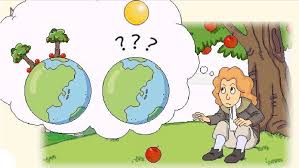
Sir Isaac Newton hypothesizes the Theory of Gravity

         Here’s why. I went to Toronto District Christian High, in Woodbridge, as a teen. Unlike many Christian schools, at Toronto Christian we were taught about evolution. We were taught, in fact, that evolution was likely how God created the universe. This is called theistic evolution.

         However, there was a single exception. Humans. According to my teachers humans were sinless special creations God made in his image. We were not part of the animal kingdom. We did not evolve. 

         This was pretty much the line I was taught at seminary, too. After seminary, I spent a year of graduate study digging deeper, comparing the Bible’s several creation stories to similar older creation stories told by ancient Israel’s neighbours. I learned that the stories in the Bible were very intentional, shabbat-night-live satiric commentaries on the more ancient creation stories of Israel’s neighbours. 

         Since then, studying human evolution has become a hobby. And one of the reasons I finally left my previous denomination was because I couldn’t, finally, pretend to play along with my denomination’s official view on human evolution.

         More recently, scientists have unraveled the human genome and the DNA within it. Doing so not only allows us to find relatives several generations removed through sites like 23andme’s DNA kits, but unravelling the human genome has helped us find criminals by the DNA they leave behind, and now even cure some diseases rooted in genetic problems. Within that genome, we’ve also discovered the deep evolutionary roots of humankind that ties us to the rest of the animal kingdom. We humans evolved from other earlier hominids, as have the Great Apes and yes, even monkeys. We are also related to other branches of the homo species, like Neanderthals and Denosivans—both now extinct. 

         But why review all this? Because as I’ve studied cosmic and biological evolution, I’ve begun to ask myself, more and more, “so what role does God play in all this?” If everything evolved, and if science can describe that evolutionary process without needing a God, then what use is God?

         And this is what I came up with. It is tentative. It is the best I can do. And I am very, very open to better ideas.

         Imagine a car. The car loosely represents the cosmos. And imagine God. God can relate to the car in several ways. For example, perhaps God is the driver.

         That is, God gets behind the wheel. God has the key, turns the ignition, and gets the car going. God as driver is in complete control. God chooses the destination. He’s the driver, after all. God steers the car around every corner. In fact, God even built the car he drives—he’s a cosmic Henry Ford. This is how most conservative Christians think of God—he’s completely in charge of the whole cosmos—starting it, directing it, and so on. It’s why, when someone dies or they get a new job, such Christians will say things like, “well, it was God’s will. That’s God’s plan.”

         Prayer, then, could be imagined as us asking the driver, God, to steer the car in a certain way, and get us to places we want to go. But God is the driver. God might listen to us, as passengers, but God might not. God is completely in charge of our journeys. Nothing is up to us. In its most extreme of the Calvinist versions of this line of thought, God’s mind is never changed by prayer. God has already decided everything ahead of time. This is called predestination—God decides everything about the destination and our drive there. Humans don’t really have a choice. No free will.

         But many Christians (and people of other faiths) disagree. For example, some Christians imagine that God is not much like a driver, but more like a passenger in a self-driving car, a next-generation Tesla, say, that he invented and built. In this case, God provides the blueprint, gets things going, comes along for the ride, but doesn’t personally steer the car himself. This is called deism.

         Deists have their own favourite analogy. Imagine finding a watch in a field. You pick it up. You wind it up. And the watch ticks and tocks. It keeps time. Perfectly. 

         If you found such a watch, you would have to presume that it was made by someone. Watches don’t just appear, by accident, as it were. So, if you found a watch, you would have to believe that there was a skilled watchmaker who designed and manufactured it. 

         Well, when deists look about the cosmos what they see is something even more wonderfully and fearfully made than that watch. The planets in their circuits, our blood coursing through veins, and all the laws of nature suggested to these ancients that, as with the watch, the cosmos must have a designer and a manufacturer. But once a big bang sets it off, the cosmos runs by itself. God is inventor, creator, but once God is done, God lets the whole mess run itself. Deism. 

         I’m more inclined to a deist view of God myself, than to a driver God who predestines everything. My problem with deism, however, is that actually, modern scientific theories can pretty much explain everything—the big bang, the appearance of life, evolution. The physical world doesn’t need an inventor or watchmaker to be properly explained. Which is why Richard Dawkins wrote a book about evolution called, ironically, The Blind Watchmaker. 

         Well, as you can see, if you don’t need God to create the cosmos and just come along for the drive, and if you don’t need God as the creator and driver either, there isn’t much room left for God. So, some Christians—liberal ones, for the most part, have begun to think of God not as the driver, not as a quiet passenger who just set things in motion, but as a backseat driver.

         You see, while science can explain a lot, some people don’t think science can explain morality, our human notions about what is right and wrong. And so, these Christians turn God into a backseat driver who is always telling us what is right and wrong, what direction to take our lives, which pedestrians and hazards to watch out for. This is a nagging God, a pushy God, a “you better get this right,” God. A liberal works-righteousness God who seems, always, to be saying, “Be better. Do more. Divest. Rally. Protest.” This God speaks to us insistently, mostly through theologians and denominational executives and pressure groups who are sure they know exactly what God wants when it comes to a whole list of contemporary issues. And while I often agree with these people, I don’t like the tone, and I don’t like the imagined God behind this tone, very much.

         None of these pictures of God ring true for me. Is there another possibility? I think there is. Perhaps God, in some wild but mysterious way offers guidance when we, alone in the car by ourselves, or together with each other as a community, seek that guidance. That is, instead of nagging us, perhaps God is more like Google Maps or the Waze app. Except those kinds of maps are too directive, too sure. So maybe God is more like the author of an old-fashioned paper map. We can turn to it for direction, but we need to read it carefully, parse its options, interpret it, and rely on the corroborating (or not) advice of fellow passengers. Only when we turn to God “The Paper Map,” for direction do we receive it—in part and imperfectly. 

          But where might God provide such guidance, in real life? Well, I’d say that scripture is where we find it; and in the cumulative wisdom we’ve built up about scripture as a community, over thousands of years. Scripture, and our reflection on it, is the divine roadmap we have for arriving ("Perhaps," says John Caputo. “We hope,” I add.) at our desired destination.

         I’m not saying that scripture is dictated by God, or that is divinely authoritative (so we better listen to it!), or that every word is inspired. I don’t think so. But overall, scripture—including the scriptures of other religions and the Testament we received from the Jewish people—scriptures do represent thousands of years of deep listening on the part of humans to a mysterious divine wisdom that permeates the cosmos and is deeply rooted in our own selves, as well. We argue about how to understand scripture, we question some of its odd suggestions that belong to another place and time, but overall, in scripture and in the communities that listen to it and truly seek guidance in it, we usually find God gently, kindly, offering direction when we seek it, encouraging us to live full lives that benefit each other and help us find our place in the cosmos.

         Scripture in this sense is a lamp that prevents our feet from stumbling when all is otherwise dark (Psalm 119:105). Keep in mind that when scripture is described as a light, it isn’t talking about a modern flashlight or streetlight that reveals all. It is a flickering, uncovered olive lamp with a sputtering wick that threatens to go out at any minute, and gives just enough light so that we don’t trip over what would otherwise be obvious rocks and chasms in the path. 

         Scripture is a divine gift. But gifts, to be true gifts, must be given unconditionally. There is no expectation of a return, no nagging about thank-you cards, no obligation to give something of equal or greater value back. If we were given a gift conditional on how we responded to it, it would be merely a financial transaction, a debt to be repaid, rather than a gift. We’d have to interpret it correctly, or else. But no. As a favourite writer once put it: There is nothing you have to do, there is nothing you have to do, and there is nothing you have to do.

         The divine gift of scripture is an invitation, really, to explore meaning and purpose beyond the facts. Science, and theories like evolution, explain a lot—everything, really. And yet, for such a world as this, we also have this one thing more, this divine gift, the divine (but often obscure!) map, for why and how to live a life—not just for survival, but for the love of all things bright and beautiful.

Monday, April 30, 2018

Yonge Street and the Weakness of God


         I have been miserable for weeks. Too much tragedy striking close to home. First there was the Humboldt Broncos bus accident that killed sixteen people connected to that team. Then, barely two weeks later, the murder of ten people on Yonge St. 

         Why does God, if God is in control, allow such tragedies? Why do some Christians believe that no matter how bad things seem, God is nevertheless in control, and if only we pray, God might fix it? Or bless me? Or heal my aunt? Or get me that job I want? Or snap his fingers and bring peace to the Middle East? I mean, there is no shortage of prayers going up asking for exactly this—and the Middle East is God’s own backyard, too. Why not clean up your own backyard? What gives? 

         Is God really in control?

         No.

         God is not in control, and one of the great tasks of modern Christianity is to come to grips with this truth. The God of control is dead, long crucified on Golgotha.

Toronto gathers to mourn the Yonge St. murders. This is Mel
Lastman Square, Sunday, April 30.
         The bus accident and the Yonge Street murders—and the riots and killings on Gaza and Israel’s border this week, none of it is God’s plan. This stuff is not God’s idea and not something God has control over. God is not omnipotent, not a puppet master, pulling us and our neighbours' strings, making things work according to some good and inscrutable plan that we have to trust in spite of all appearances. 

         Nor are we humans, in turn, puppet masters who can make God dance, if only we pray with enough conviction, or enough times, or with enough people in what is sometimes now called a “concert of prayer.” (It’s all in the technique, apparently, so long as the technique is not to use a closet!)

         No. God is not omnipotent. God does not cause or allow bus accidents or murders or global warming or poverty or crime. God is not an eerie undivided substance in three persons who sometimes answers prayers but usually not. Thinking so is just a fancy religious way of getting us off the hook for these things. 

         The truth is we humans are mostly responsible for the tragedies that get reported on the nightly news, as well as the good things that usually go unreported. 

         So, what does God do, if God doesn’t snap his or her fingers to make things come out peachy keen for us? Well, taking a hint from John Caputo, I like to think that God that comes to us not in fire or earthquakes and implausible answers to impossible prayers, but as with Elijah on Mount Horeb—read it in 1 Kings 19—God comes to us in a gentle but insistent whisper. As Jesus says of his own words, “What I say to you in the dark, tell in the light; and what you hear whispered, proclaim from the housetops.” 

         God is not a monarch in the mold of a King David or a Pharaoh Thutmose, only divine. God is not a grotesque projection of our own worst rulers. God is, rather, in a strand of scripture that speaks to my experience, a gentle persuader, a mysterious cosmic susurration for shalom. God invites us to find him (or her) in the good we do rather than in the impossible things we ask for. God is the main event in all good, washing over us, inspiring us, calling us to be good. 

         God whispers. God’s haunts us with dreams of peace in wartime, with hunger for shalom where there is chaos, and with the desire to embrace and love where there is grief. God whispers that it is the least and the last, those unable to advocate for themselves that ought to be our number one concern. 

         Responding to this whispered plea, to this event both as grand and as silent as the cosmos, is called “following Jesus.”
         
         When things are at their worst, God whispers to us, in scripture, encouraging us to love our neighbours as Jesus loved his, and to imitate people like Terry Fox or Martin Luther King or Malala Yousafzai. We will, perhaps, never achieve their kind of world-changing stature, but we can imitate them in a way that makes a difference for the ones we are with.

         After Humboldt, I remembered that hope in the face of tragedy is a discipline we embrace so that whatever we touch becomes more of what it is supposed to be.

         And this week, in response to the murders Alek Minassian is charged with, Toronto’s citizens did did exactly that, embraced the discipline of hope, and in so doing made our city, province, and nation more of what we are supposed to be. 

         Last Monday bystanders who escaped death held the hands of the injured and dying. First responders on the scene saved lives. There was no panic. Hospital nurses and doctors did their job. Not only did people of all races suffer the tragedy, but together, people of all races and religions helped us deal with it. The police force has operated in this city, since its use of excessive force at the G-20 meetings in Sammy Yatin’s murder, under a cloud, for good reason. But the police officer who arrested the suspect acted in a most exemplary manner, and that gives me great hope that we can resolve some of the systemic issues we’re facing on the police front. 

         The American press was incredulous. According to CNN, “Politicians of all stripes were calm. The media was careful. The police were disciplined. And the people were unfazed. Instead of hysteria, accusation and anger, there were sorrow and sympathy. No xenophobic calls for vigilantism or limits on freedom. It was an extraordinary exercise in restraint -- a particularly Canadian response.”

        We are building something very special in this country—a multiethnic, caring, just society. Canada is no utopia, of course. This country is not perfect. Canada is also not—as some Americans believe about themselves—God’s one special nation. No, here in Canada we continue to struggle with things both profound—environment and racism; and mundane—infrastructure and traffic congestion, among a host of other issues. We have not arrived.

         But Canada’s response to tragedy gives me hope that we can tackle such issues not merely for personal or political or corporate gain, but for the good of all Canadians. Just as we took on the tragedy without asking questions about religion or party affiliation or rank or wealth, we need to take on our every neighbours’ needs and injustices, struggles and dreams, as if they were ours. 


         This is human faith taking responsibility for itself rather than waiting for God to pull strings. This is hope embracing discipline. This is the Canada I love and want, and the Canada this world both needs—and already has.

Monday, October 30, 2017

If Not for Answering Prayers, What Is God Good for?


            God does not answer prayers—at least not in the way we pick up a ringing phone or stop our car to help a neighbor push hers out of a snowbank. That, at least, was my conclusion in the previous blogpost. So, if God doesn’t answer prayers, what is God good for?

            This, of course, is a very contemporary sort of question, the kind that health and wealth preachers love to wallow in. Modern people want a pragmatic, sensible God who is useful, who blesses us and America (and Canada, too, maybe). God provides salvation in the hereafter, gives the church a reason for being (and a means of providing some with jobs and sometimes even power), and God is useful for unleashing passions that can overcome almost any political obstacle or tribal enemy and even inspire terrorist acts.

            I don’t like this sort of useful God. But if not good for answering my prayers, what is God good for? Why bother?

            Reflecting on this—I, and other theologians, have begun to imagine that God might not exist at all, at least in the sense that God is a person, place or thing as usually understood. I am trying on the idea that (perhaps) God is (certainly) not a substance or essence, a strong arm or a genie who snaps his (almost always “his,”) fingers. This explains all unanswered prayer, at least. There is no person, place or thing to do the answering.

            Instead, maybe God is a Spirit in the Vocative Case, a “weak force,” a cosmic plea hidden in a three-letter puff of air (interpreted, amplified, and corrupted by scripture and its authors), praying to us. God might be an inspiration (or better yet, an expire/ation) rather than a sovereign being who sits on a throne somewhere—even if such sitting is understood to be metaphorical.

            A Spirit in the Vocative Case? What might such a God be (leaving aside for a moment that by “Spirit,” I do not mean some “thing” one could put under a microscope or find with a P.K.E Meter)?

            Well, maybe a Spirit in the vocative case might be something like the call of the wild.

            Almost forty years ago I taught Jack London’s famous novel The Call of the Wild to my grade nine English class. You probably remember the story. A brave, well-trained, and strong dog, Buck, is stolen from his California home. Buck is shipped to Alaska to be a gold rush sled dog. He has a rough time of it. Ugly owners use, abuse, and starve him before he is finally adopted by a good man. This man, in turn, is killed by local Yeehat indians. So, Buck leaves human society behind and becomes leader of a pack of wolves.

            There is both much to commend this book and to condemn it. The Yeehat episode is particularly unsavory and racist. Ultimately, Buck’s life turns out to be a short course in Darwinian evolution, where Buck has to overcome technology and clubs, stupidity and ugly leaders of the pack in order survive. When the book opens, Buck is a pet dog, albeit a big one; by the end he has survived all thrown his way by civilized humans to find his true self. He has answered the call of the wild.

            What is this call? London never stops to define it, though he describes it. Buck “loved to run in the dim twilight of the summer midnights, listening to the subdued and sleepy murmurs of the forest, reading signs and sounds as a man may read a book, and seeking for the mysterious something that called -- called, waking or sleeping, at all times, for him to come.”

            And again, “Deep in the forest a call was sounding, and as often as he heard this call, mysteriously thrilling and luring, he felt compelled to turn his back upon the fire and the beaten earth around it, and to plunge into the forest, and on and on, he knew not where or why; nor did he wonder where or why, the call sounding imperiously, deep in the forest.” 

            This call of the wild, a vocative spirit in its own right, is not a being or substance or essence. It is not the cry of anyone one thing or even of many things. The wild itself, where the call originates, is also ever elusive, some “thing,” (maybe) that cannot be contained. We drag along our canteens and thread and needle repair kits and camp stoves in search of it, but thinking we have arrived, the wild is defeated by paths through the woods, campsites neatly arranged, and fire pits that have been in use (perhaps) for millennia. The wild recedes forever in the presence of our axes and knives and maps and the scraps of garbage we never quite manage to pack out. The closer we get to the wild, the more we realize that we cannot have it, or hold it, or pocket it, ever. And yet it calls.

            And for all the (literary) power of its call (powerful for some, perhaps, but not powerful overall) the wild is weak. It retreats under the onslaught of human tinkering. We cannot preserve it because even the act of preserving is to civilize, theorize about, and nurture—all actions inimical to the wild.

            God is as weak as the wild, and calls to us as the call of the wild did to Buck. God has no army (unless you count Swiss guards or terrorists or misguided nationalist troops), no place to lay his head, no kingdom other than the one that might be planted in your heart. God is weak, and God’s call is for a hope, a dream, an imagining, a utopia, a shalom that God has no power to bring to pass. Unless, perhaps, someone, some tribe, some Horton hears the God’s vocative case for such things. Maybe. And of course, when they hear, they haven’t even begun to understand. And when they understand and build, the thing called for is lost. Still, God doesn’t so much answer prayers as waft over us as a prayer of his or her own (or something’s or no thing’s own. Wouldn’t want to nail God down at this point!).

            Or, as Caputo writes, “God does not exist; God is a spirit that calls, a spirit that can happen anywhere and haunts everything insistently. I have found it necessary to deny existence in order to make room for insistence.”

Monday, November 16, 2015

John Caputo's "Theology of Perhaps."


         I am reading a very difficult but wonderful book.

         The book is John D. Caputo’s The Insistence of God: A Theology of Perhaps.

         The book is difficult because after finishing each paragraph, I have to read it over again. It takes a long time to get through a chapter, and time always feels like the one thing I don’t have enough of.

         The book is difficult—painfully so, sometimes—because it is about me for about 80% of my life, and I don’t like what I see there. I grew up with what Caputo calls the “militant logic of omnipotence, the imperial logic of onto-logic and theo-logic.” And so, from Caputo’s perspective, throughout my career I’ve written and spoken, “the theology of an agent-God, [that] requires ventriloquists, people, up to now invariably men, who authorize themselves to speak in the name of God.”

         Caputo is right. I used to be so sure, so quick to tell others, so on guard for the benchmarks of orthodoxy, so free and easy with my “Christian” perspective on everything from politics to education, so eager to write editorials in the imperative. It’s what church leaders do.

         Many events in my life eventually conspired to rock my certainty. I’ve written about some of them before: travel to places like Hiroshima, Rwanda after the genocide, and Haiti; and relationships with people from other races, ethnicities, and classes all telling the same stories about white privilege, structural racism, and the power of wealth for the few. I started reading widely outside of the pool of approved Christian scholars I was schooled in. Teaching the Heidelberg Catechism kept me asking myself, “really? How can anyone be so sure?”

         Caputo’s book is difficult. It isn’t that the vocabulary he uses is unfamiliar. I understand the common sense meaning of Caputo’s favourite words, words like, “insistence,” or “perhaps,” or “existence,” or “event,” or even “prayer.” It is just that how Caputo uses these words stretches the contexts I’m used to, or sometimes turns them upside down. Reading Caputo is like the experience I had this summer, as a speaker of basic Dutch, trying to understand the Afrikaans speakers of South Africa. I think I get it, I think I get it, but then I don’t.

         Caputo is also hard because he’s a prose poet, using literary tools like rhythm and assonance and repetition to make his words sing. Along the way, though, his words become more evocative than definitive (if definitive writing was ever really possible). 

         Ultimately, Caputo writes in a different paradigm while still using theological and philosophical language that’s half-familiar. It’s disorienting. Thomas Kuhn famously said (something like) communication across different paradigms is incommensurate—that is, that people working and living in two different scientific paradigms couldn’t understand each other. When I read Caputo I do so with ears and mind trained in one paradigm straining to understand with a heart that has landed in another. It takes patience.

         But reading Caputo is both difficult and wonderful. Wonderful because he says things that suddenly break through my fog and move me: “What we call in Christian Latin ‘religion’ may be thought of as offering hospitality to God . . . and then keeping our fingers crossed.” Or this quote that made we smile and ache both: “No one who reads the New Testament slowly would ever come up with a theory that associates God with ‘natural law,’ not when irregularity, interruption, and lawless miracle are the very occasion of the appearance of God.” Every page of Caputo is full of these opportunities to stop reading and meditate instead.

         His book is also wonderful—for me—because it is heuristic. His writing inspires new ideas for preaching, and for thinking about old problems—like the problem of evil, or the problem of using Greek philosophical categories to talk about God in the creeds. His book also inspires all sorts of flights of fancy that may or may not go anywhere. He reflects, for example, on how the church fathers—always suspicious of the flesh—wondered of what use teeth or sexual organs or digestive systems could be in heaven when surely we would not need such things anymore. That got me to thinking about Jesus’ saying that in heaven we will be like the angels who do not marry. Is there an alternative interpretation of these words that doesn’t cater to the church’s historic suspicion of the flesh? God, after all, actually created that flesh, according to the Genesis myth. Could it be that in heaven we're all friends with benefits with everyone? That we could love others with perfect agapic selflessness, erotic pleasure, in a companionable manner? In such a heaven, marriage might be an outmoded and unnecessary institution!  We could enjoy the heavenly banquet and then romp. Sure, these are silly theological meanderings—especially if you’re no longer sure about heaven—but these meanderings also suggest that theology can sometimes be a playground rather than a battlefield.

         Caputo has a serious program that constantly breaks out into laughter. He challenges me with refreshing ideas like the notion that God needs me (rather than just me needing God), or that using the language of substance and essence (rather than insistence) to speak of God is fundamentally wrongheaded. I’m searching for something in all this to build on, a bit worried that Caputo might be better at deconstruction than construction. In fact, he is. But once he’s done, there is something new there that whispers to me. If only I knew what it was.


         Caputo is a very difficult, but wonderful writer!