Monday, October 17, 2016

Walls: From Scripture to Trump


When Obama won the presidency, eight years ago, I wept. I’m sure some of you who watched the Chicago celebration also wept. My reasons, though, were very personal. I saw his victory as a ray of light for my own family. 

Election night, Chicago, 2008
My daughter, Mariya, is an Afghani. Her birth family moved to the United States when Russia invaded Afghanistan. She is Caucasian, like most Afghanis, though often mistaken for an Arab, which shouldn’t matter, but does. Her daughter, my granddaughter, Dela, is Afghani-African-American. My daughter-in-law Gillian, is Shona, from Zimbabwe. Her two children, my grandchildren, are African-Americans. I am a dual American-Canadian citizen.

Anyway, when Barack Obama won, I wept because I thought I saw a ray of light when it comes to race-relations. I dared to believe that we were making progress. I believed, hoped, prayed that my grandchildren could live the American dream, that they could be safe on American roads if stopped by the police, that they would be treated as humans in school, not as black kids in need of special discipline, as is too often the case.

That was then . . . by now:

  • Donald Trump became the Republican candidate for president. Donald Trump has been sued by the US Justice Department for systematic discrimination against Blacks who wanted to rent his apartments. When Blacks applied, they were told the apartments were no longer available; when whites applied for the same apartment hours later, they were available again. 
  • Donald Trump, who once said of his casinos, “Black guys counting my money! I hate it. The only kind of people I want counting my money are short guys that wear yarmulkes every day.” 
  • Trump, denounced Mexican immigrants as, quote, “criminals, drug dealers, rapists,” who has demanded that no more Muslims be allowed to enter the USA, who for months refused to distance himself from racist white supremacists. 
  • Trump, who insists that rather than take down walls, he wants to build them. 
  • Trump, who brags about sexually assaulting women, but denies that he ever did it when nine (and counting) women come forward to say that he assaulted them. 
  • Trump who says “an eye for an eye” is his favorite Bible verse (check out Exodus 21:22-25). Jesus, however, said, “You have heard it said ‘eye for eye, and tooth for tooth.’ But I tell you, do not resist an evil person. If anyone slaps you on the right cheek turn to them the other cheek also” (Matthew 5:38-39).
Well, ganging up on Donald Trump is almost too easy. So easy, in fact, that we don’t pay attention to similar issues and large walls closer to home.

In Canada, for example. One day, last week the paper included a front-page story about a Black man who called 911 because he was robbed on Spadina St., in Toronto. Within minutes there were ten police there—frisking his private parts, going through his luggage, forcing him to raise his hands, scaring him half to death—even though he was the one who called 911. Here in Canada we still struggle with residential schools and their aftermath, missing and murdered indigenous women, high populations of First Nations and Blacks in our prisons, carding, unequal treatment of persons of color in our schools.


On the other hand, there is this lovely video. 


Biologically, we are one. But with respect to race, we all struggle with our personal prejudice, fears, misconceptions, and sometimes the violence of others. I do too.

But listen. When the Christian church was founded, its first leaders insisted on a huge, fundamental change in how people in their era treated other people—people on the fringes. The Apostle Paul put it this way, more or less: In Christ Jesus you are all children of God through faith . . . There is no longer Jew or Greek or Black or Arab; there is no longer slave or free or immigrant or First Nations, there is no longer male or female or transgendered or gay, for all of you are one in Christ Jesus. In another place, speaking of how both Jews and gentiles are welcome in the church—and so presumably anyone is welcome, Paul added, “he has broken down the dividing wall, that is, the hostility between us."


Eight years ago, it was Obama who was our ray of light. Today, as Christians, we need to remember that our religious DNA demands of us that we tear down those walls—sexism, racism, homophobia, xenophobia—it all has to go! Not just for my grandkids, but for Christ’s sake.


Monday, September 26, 2016

How Strong Is God, Really?


            In The Wizard of Oz, a young Kansan girl, Dorothy, and her house are both transported by a tornado to the magical land of Oz. Dorothy wants to go back to Kansas, and so decides to ask the Wizard of Oz for help. On the way to see the wizard, Dorothy meets a lion without courage, a tin man who has no heart, and a straw man who has no brains. When they arrive, the Wizard promises them all they ask for, if only Dorothy can kill the Wicked Witch of the West. Dorothy does so, with a pail of water. So they all finally return to the Wizard’s throne room to claim their prizes.

            And it turns out that in spite of the fact that the Wizard seems to be, in turn, a great head, a ball of fire, or a terrible beast—it turns out that the Wizard will not deliver what Dorothy and her friends hoped for.

            Many Christians treat God much like Dorothy and her friends treated the Wizard. That God is bound to disappoint.

            What I mean is this.

            Many of us, certainly me, have been told since we were knee high to grasshoppers, that our God—if not a wizard, is sort of like an Emperor-Pharaoh-Caesar God, only better, because this God can do magic too. This God rules over every detail of our lives, sometimes answers our prayers and sometimes not, and after we die, he—God is always a “he” in this tradition—he sits in judgement over our lives too, like Caesar, offering some of us a thumbs up and some a thumbs down.

            In seminary, this God was described as—using words and concepts mostly derived from Greek philosophy—omniscient, immutable, impassible, infinite and omnipotent; God is omnipresent, of one substance, not mixed, uncreated, self-existent, self-sufficient, immaterial, perfect, and—in spite of all of these descriptive words, God is also ineffable, which—ironically—means “unknowable.”

            My professors also introduced me to Saint Augustine, who said, “Nothing, therefore, happens unless the Omnipotent wills it to happen.” John Calvin added, “God foresees future events only by reason of the fact that he decreed they take place.” In other words, according to these giants of Western theology, it isn’t just that God permits terrible things to happen, but God actively insists that they happen.

            Finally, this God sends his son to death on a cross. This is because, according to most Christian theology, God cannot forgive us our sins unless his (mighty!) divine honor, which we have offended; or perhaps his (mighty!) divine sense of justice, that we have transgressed—God cannot forgive sins until he is appeased by blood. Which, to me at least, makes this mighty God of Western theology seem very small and very petty, because most of us know how to forgive—say our children, or our friends—even we know how to forgive without demanding an eye for an eye and a tooth for a tooth as forgiveness’s price.

            Look, I admit this picture of the mighty God of Western Christendom is a bit of a caricature. Forgive me. But this view of God is out there, everywhere, it seems. However, I would like to suggest another picture of God also found in scripture's pages that I find more helpful and more believable.

            This God is—surprise—not a God of power and might, but a God of weakness, a God who comes in the still quiet voice, the God who, says Isaiah, hides; the God who is about as mighty as a first century fisherman, who is so tiny and inconsequential that she lives in our hearts, as insubstantial as a puff of wind from who knows where going who knows where.

            And, with respect to all those theologians and philosophers who have important sounding Greek words to define God, remember this: just as you cannot nail down the wind to examine it, you cannot nail God down to examine her. The best we can do, actually, to describe God is to tell stories and use metaphors and similes. So Jesus said, “God is like the wind”—so also says Isaiah too—who then adds, you cannot measure this God on any scale. God is what no eye has seen, no ear has heard. God is weak, in the very best way possible, like an evening wind that refreshes after a hot day, one that caresses and rebirths us.

            God is weak. This means that as much as we would like God to interfere, fix things, answer prayers to repair Aunt Minnie’s gall-bladder or fix the US election, God will not. Such interference, like antimatter, would destroy our world and universe by compromising its very structure as a marvellous construction of cosmic law and matter, of human freedom and risk. The weakness of God is the tradeoff God accepts to give us life.

            God is weak. Jesus explains. He said, “I am the way, and the truth, and the life. No one comes to the father except through me. If you know me, you will know my father also.”

            Amazing. This ancient Jewish man, a poor pedestrian carpenter, says, “If you know me, you know God.”

            So if Jesus is mirror to God, this must mean that like Jesus, God does not raise her hand or lift a sword or use threats of hell to get her way.  

            If Jesus is our mirror to God, then we meet God especially in our embrace of the hungry and the refugees who cross our path, for Jesus says he is to be found in the least and the last.

            If Jesus is our mirror to God, then we must find God especially in the wisdom of parables that cannot be humanly explained, and in the humility of beatitudes that the strong in this world scoff at, for they are not at all impressed by divine weakness.

            God is weak, by her own necessary design. But God is also, says a Jewish rabbi, like a little girl who hides during a game of hide and seek, and then laughs to give herself away. And when the wind blows, if you listen carefully, you will hear that laughter, which is actually a divine invitation for us to find our true selves, to become fully human, to square our own shoulders and live as God’s own ambassadors of love and reconciliation.


            God is weak, like a gentle wind, so that we may be strong, like God.


Tuesday, September 13, 2016

Is Instant Karma a Thing?


Karma is a thing. All you need to do is Google it and you’ll run into scores of companies and NGOs that trade on the name, “Karma.” There is the ill-fated, all-electric supercar, the Fisker Karma, reincarnated last month as a Chinese brand. Karma Wellness Water has lots of probiotics but only 20 calories for long life. Karma Kreme orange flower and patchouli oil body lotion is to die for. There’s a Karma co-op, a Karma café, and Karma condo, all in Toronto, and a hundred more businesses with “Karma” in the name. Karma is a thing. But what, exactly?

The word, “karma” has passed into popular culture as a trendy, hip thing that doesn’t have much to do with its roots. Now, what I want to talk about today is a specific kind of popular karma, Instant Karma. But for that to make any sense, you need to bear with me for a few minutes while I explain not Instant Karma, but ancient karma—its roots. Originally, in Buddhism, karma was a sort of moral bank account.

You see, Buddhists believe in reincarnation—that when we die our souls will be reborn into another body. What body we are going to be born into depends on our karma account: the sum total of the good and the bad we did while we were alive.

Evil actions, in this life, like killing, stealing, and lying are bad karma and will lead to rebirth lower down the social ladder, or perhaps even lower down on the evolutionary ladder. Good actions, on the other hand, such as generosity or kindness adds to your karma and leads to a step up in the next life.

In other words, in Buddhism, you are judged when you die, though not by a god, since Buddhists don’t believe in gods. You are judged by the very laws of nature, by the moral structure of the universe—however that works, exactly. So, for example, the Buddha himself once said:

Not in the sky, nor in the midst of the sea,
Nor by hiding in a mountain cave:
No place on earth is to be found
Where one might escape one’s wicked deeds.

On the other hand, traditional Christians do not believe in reincarnation. They believe, rather, that the soul, upon death, either goes to heave or some other such good place; or the soul goes to hell. I’m speaking of traditional Christian here, because actually there I a lot of debate about such things now in nearly all Christian churches. The idea of hell is definitely in decline.

But that basic idea about judgment is also present in our text from Galatians. It suggests that when we die, God will judge us for the good or evil we have done. If we live a corrupt life, we will die—eternally; and if we live a spiritual life, we will live, in bliss, eternally.

Now, there is a sermon or two here, on what really does happen when we die—reincarnation up or down the ladder of life, based on our karma; or, judgement to either heaven or hell or something like that. For now, as far as such judgment is concerned, suffice it to say that there is another Biblical theme that appeals much more to me—that is the theme of grace. We are “saved,” whatever that exactly means, not because we’re so good, but because the overwhelming picture of God in scripture is one on the side of life, redemption, and new beginnings. As it says in 2 Corinthians 5, one day all things shall be made new. When we die, the Biblical vision is that on the basis of grace we will awake to a whole new adventure.

So that’s the traditional thinking of both Buddhism and Christianity with respect to karma. But getting back to karma being a thing—it’s Instant Karma that people usually think of, rather than the Buddhist doctrine of reincarnation.

Everybody’s favorite karma these days is Instant Karma, especially the karma that gets people back. I’ve picked three popular vine videos to illustrate what Instant Karma is all about.

1. A Man and His Cat

2. A Cat and Its Treat

3. A Boy and a Girl

Instant Karma is the idea that the universe instantly rewards people for the good they do and trips them up for the bad they do. Like these slogans suggest:


So what is going on? Well, we all want life to be fair. And looking for Instant Karma is a kind of magical thinking rooted in our deeply held desire that life be fair.

We do this sort of magical thinking all the time, though often unconsciously. Our pervasive and magical belief in Instant Karma is the subject of many psychological studies, too. For example, in one experiment described in the journal Psychological Science, some students at a job fair were led to think that the job search process was really beyond their control. That is, those hiring were picking resumes from the pile without scrutinizing them. Other students were led to believe that getting the job totally depended on the quality of their resumes.

Now, at the same job fair, a charity was soliciting donations from those who applied for work. Time and again, the psychologists observed that the applicants who did not believe that getting the job actually depended on their resumes donated more money to the charity than the applicants who thought it all depended on the quality of the resume. The big donors were counting, perhaps unconsciously, on Instant Karma helping them get the that job.

In a follow-up study, job seekers who were encouraged to see their job search as beyond their control were discovered to be measurably more optimistic about landing a job if they gave money to an unrelated charity, especially compared to those who did not give at all.

Instant Karma. We manipulate Karma to get what we want by offering Karma some delectable treats. We unconsciously scratch Karma’s back, hoping that it will scratch us in return.

But here is the thing. There is no such thing as Instant Karma, and we think about it, we know it, since life is demonstrably unfair.

For example, we all know that many innocent children have died in Aleppo, but that Bashar al-Assad nevertheless still rules. We all know that some unkind people get rich and some poor people are saints. We all know that some politicians go through multiple bankruptcies, spew innumerable racist comments, and don’t pay their contractors, even after they have satisfactorily finished their work, but nevertheless are major party candidates. Instant Karma is a nice thought, but it isn’t exactly built into the structure of life.

The Bible agrees. Jesus says, “God makes the sun rise on the evil and on the good, and sends rain on the righteous and the unrighteous.” Jesus, our ideal for doing the right thing was himself rewarded with death on the cross for his acts of love. How is that for Instant Karma? God isn’t sitting in his throne-room with a calculator, throwing out blessings or curses depending on your running score.

Life isn’t fair. Good deeds often go unnoticed and evil is rewarded. Sometimes—in war, when Tsunamis strike, or when we’re born mired in poverty—some of us suffer for no reason that we can see at all.

Life isn’t fair.

There are many mysteries here. There is the mystery of God. If God isn’t running the world on the basis of rewarding the good, punishing the evil, then what is God doing? We’ll examine this question next week.

Still, there is one crucial and hopeful thing I do want to say about life being unfair. We have an antidote, and you won’t find it far away in heaven. The antidote is here and now: living in community. For if God isn’t sitting up there with a calculator doling out blessings and curses based on how good we are, then we are going to have to rely on each other, instead. God may not have a calculator, but we have love and compassion, grace and kindness, resources of time and money. We can dole out such things to address each other’s unfair misfortunes.

In the absence of Instant Karma, we can support each other through life’s ups and downs, and even life’s endings. And, at root, that’s what church is all about. We are a community that picks each other up when we fall, that forgives those who fail, that holds each other accountable when we want to quit, that—like Christ—embraces those who have been rejected, suffers with each other when there is no cure, and visits when anyone is lonely.

Instant Karma, though superficially appealing, isn’t really a thing. But our church, Lawrence Park Community Church, is a very real thing. In the words of this morning’s scripture we “bear one another’s burdens, and in this way fulfill [not the law of karma] but the law of Christ.” God may not be in heaven with a calculator, ready to dole out Instant Karma, but as Jesus once said, where two or three are gathered in his name, here, living in community, God is with is nonetheless.

Monday, September 12, 2016

Mayor Tory, Raise My Taxes!


Warning. This isn’t so much about my faith in God doing the right thing as it is in politicians doing the right thing. Specifically, I want my local, provincial, and federal politicians to do the right thing by way of Toronto.

I wish they would raise my taxes—and spend the new revenue wisely for the good of the marginalized, and the good of the whole city.

I love Toronto. I grew up nearby, in Brampton, and have lived in the city or its shadow for the past ten or so years. The neighborhoods here are vibrant and safe. The city is a rainbow of different ethnicities. There is plenty of parkland and waterfront and there are even quite a few jobs. In fact, Toronto is a great city. Compared to many of the other cities I’ve lived in or spent significant time visiting: Manila, Harare, Johannesburg, Port au Prince, Grand Rapids, and New York City, the grass is definitely greener here. No wonder The Economist just rated Toronto the fourth most livable city in the world. Only Vancouver, Vienna, and Melbourne were rated higher. By a hair.

But Toronto has huge issues in the areas of transit, housing, and poverty to name just a few.

For starters, consider housing. Exploding prices mean home ownership is becoming less and less possible. Rents rise as supply wanes. And the supply of truly affordable housing is under great threat. Toronto Community Housing, a government-run public housing organization, is a mess. It’s stock of housing is in need of 2.5 billion dollars of repairs, and this number grows by about 100 million dollars every year. Many units are closed because they are unsafe. Paint, plumbing and repair fails are everywhere. The state of public housing in Toronto suggests that politicians—and perhaps even most of us—just don’t care about the poor. As a result, their housing is ugly, often unsafe, and should be undesirable. Yet 75,000 people are lined up to get one of these units. Where are they living now? It must not be pretty.

Some are living in ghettoized neighborhoods. It will take thoughtful social engineering, educational initiatives, fairer policing, better schooling, better transit and less racism all around to turn around neighborhoods like Jane and Finch. Let’s do it. Everyone deserves the Canada of their dreams. But then everyone also needs equal opportunity, and where you live or go to school shouldn’t slow you down.

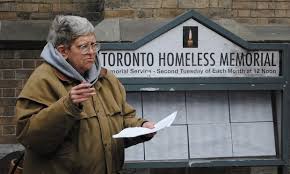
Toronto also has over 5000 people living in the streets. Many need medical and psychological help. All of them need food, safety, warmth in the winter, and to be treated with basic human dignity. Yet social programs don’t cover these needs. Homeless shelters don’t have enough beds. Hospitals don’t have residential programs for the mentally ill. Feeding and shelter are often left to ad hoc non-profit groups, as if the homeless are not every citizen’s responsibility. Or don’t we believe in the Canadian safety net anymore?

In Toronto, the average car-based commuter spent 85 hours stuck in traffic last year. It reminds me of Manila’s infamous EDSA parking lot. Worse, for many people, using transit instead of driving its slow by comparison—never mind all the subway delays and overheated cars that go with using transit. The TTC needs more than 2.5 billion dollars, now, just for repairs. The downtown relief line, which is sorely needed, will cost a minimum of 7 billion dollars—likely more given that the Scarborough one-stop subway is going to come in at about 3 billion dollars and the Spadina extension is getting close to 1 billion dollars in cost overruns. Several more unfunded transit expansions are in the planning stages. But no one is willing to own up to any personal responsibility for paying for the transit system we need.

Just last week we learned that Toronto Public schools have a 3.5 billion dollar maintenance backlog. At city budget meetings las year city manager Peter Wallace reminded councilors that the total value of capital projects city council has approved, but for which it has not secured funding, is about 18 billion dollars. And that, presumably, doesn’t include the unapproved school, public housing, and new transit needs.

And that 18 billion dollars certainly doesn’t include a new 20-acre park over the GO tracks at Union Station, what one newspaper called a Tory “legacy” project. Don’t get me wrong, I’d love to see that park—but the way things are going, it is going to be built on the backs of commuters stuck in traffic, transit users who are more and more crowded into more and more uncomfortable trains that break down far too often, poor who can’t find affordable housing, homeless who are just plumb out of luck, and kids who go to schools that are falling apart.

Or, we could have our cake and eat it too. We could have the beautiful new park everyone is going gaga about, and we could fund all the shortfalls in housing, transit, and so on. We just have to raise taxes. For example, if over the next two or three years or five we could raise five thousand extra dollars from five million people, we’d raise twenty-five billion dollars.

Mayor Tory, let’s do it.

We both know that there is no way we’re going to raise the needed funds simply by ending the gravy train. That’s a great slogan but it’s also magical thinking. Such savings just don’t exist in today’s budget. There is no way that private industry is going to fund subways or city streets or sewer projects. The way forward so far seems to be one based on making decisions so incrementally and timidly that new challenges—the school construction backlog, for example, or the Finch Ave East Rapid Transit project—new challenges pop up far faster than we can resolve the old issues. Sure, nobody loves taxes. But putting faith in a no-tax-raises-ever philosophy is to concede our inevitable defeat when facing these problems. It’s dumber than blind faith. Why will no one say so!

Well, I will. Let’s roll out more taxes and user fees. And sure, the new money must be spent wisely, with little waste. Of course, the issues are complex, especially in that funding decisions require agreement between three levels of government. Still, there are not three levels of citizen; it's the same people who fund all three levels of government. So governments better work together better than they have up till now. The new spending is going to have to be spread over several years and include raising money via bond issues, going into other forms of debt, and also take the possibility of new needs as yet unknown into account.

Perhaps most important, new taxes need to be paid by those who can afford them, rather than by those struggling hardest to make it. The new taxes need to be graduated, and based on user fees that reflect the relative luxury of service offered. In the USA, cities tax local residents mostly based on their federal taxes due, which isn’t regressive at all. That would require rewriting Canada’s tax code, by so what?

The thing is, compared to most people, for most of history, many of us modern middle class and well-to-do citizens are living the life of Riley. We have more by way of fancy car, luxury vacations, consumer goods, clothing, lattes than any generation ever. Some of us have no idea what making a sacrifice is all about. Still, for the common good, those of us who have more must cut back a bit and step up to our communal, civic challenge.

We must pay higher taxes: for the poor, the marginalized, and for the good of the city

Monday, August 29, 2016

I Love Theology. But.


I love theology. But.

I love theology. I’m not sure where the love comes from, other than that I was born into a healthy religious family. I grew up in a community that valued theology and honored its practitioners, like we might honor a software engineer or neurosurgeon now. In any case, I took to theology early and remain fascinated by it now. I read theology like other people watch TV or play golf.

I think what I liked best about theology, at first, was theology’s straight edges and square corners. It’s my nature to like order. At an early age, theology seemed clear and rational in a way I felt I could master. When I was in the fourth or fifth grade, I wrote a twenty-page (hand-written, of course) discourse on the Heidelberg Catechism’s “logical” approach to the atonement. I loved the sense of it, how human sin needed a human mechanic, and how the horror of human sin needed a divine mechanic, and how both needs were provided for by Jesus. It just fit, like a Rubic’s Cube (which I never did master) or a Lego pirate ship (a type I regularly construct, now, with my grandson). The feeling that theology made a lot of sense lasted a long time for me. I even did a Master’s degree in Systematic Theology—after I finished seminary, because I just couldn’t get enough.

I love theology. But somewhere along the way, the word “systematic” started getting under my skin. Especially the sense that I get from so many theologians (who nevertheless rarely agree with one another) that they get it—most of it, and what they don’t get is also clearly laid out. Their rhetoric usually breathes certainty and often mimics the language (and complexity) of scientific papers. But.

How do you explain a God who is love (one of two direct predications of God in the New Testament, the other being “God is Spirit”)— presiding over a corner of his or her cosmos where souls are forced to endure some sort of eternal torture? How is it that the “ecumenical” creeds rain down anathemas on people who can’t buy the Trinity—and specifically the Trinity covered by layers of Greek “substance” philosophy varnish? Does God, could God, might God really damn someone for getting the Trinity wrong, as the creeds insist? Or for getting the right measure of divine and human natures in the person of Jesus wrong? If this is so important to God, why didn’t God make matters a bit more clear in scripture? And what in the world is the book of Revelations doing there, on the tail end?

Well, of course, I could go on and on, enumerating one theological conflict (even war) after another, all based on “true” readings of scripture. Expecting to be able to put together a systematic theology as a “true” reflection of this scripture, though, seems like falling into the trap of expecting to see the emperor with clothes on. Even though that is exactly what people do.

And yet the stakes are high. That is, for most of the history of Christianity, and for much of Christianity today, the structure of theology is binary. You get the code right, and you’re okay. Get it wrong, and you are outside the pale. Excommunicated. Burned at the stake. Put in jail. Suffer pogroms or impending defeat in an end-time battle. That will put a damper on any curiosity about theological borderlands.

The impact of getting your theology “wrong,” in almost every faith tradition isn’t always apocalyptic, of course. It might just mean losing your seminary or college job. It might just mean having to switch denominations, as in my case. Or it might just mean having to keep your mouth shut if you’re not up to the big switch. I have quite a few letters from pastors in my former denomination who confess to having taken this latter path.

I’m remembering now, as I get on with this Jeremiad, how in my Introduction to Theology class we spent a long week learning about how theology was a science. So of course it had to be systematic. But if it is, it is the saddest science ever, because based on the same evidence, its varied practitioners rarely come out with the same results. If theology is systematic about anything, it is systematic in its inability to reach a consensus.

So why all this emphasis on “systematic?” I never find any systematic theology in the Bible. I find Parables. Wisdom literature. Exclamations of hoped for truth couched in streams of doxology (I’m thinking Paul here). Myth at the beginning and end. Stories about Jesus, sometimes constructed as just one thing after another with a crucifixion at the end (Mark) and sometimes constructed around ciphers (John). But not much by way of systematics as we understand it and churn it out.

So why so much systematizing now? Was it Constantine insisting on a religion that he could successfully wield to unify his empire? Was it a bunch of academics who took Greek substance philosophy too seriously, so that we’ve suffered from trickle-down idiocy ever since? Was it the very rationalistic fabric of Western learning? Was it the rise of the University? Or perhaps evolution of the Roman church and its episcopacy, its lust for power and its rage for order?

Well, it’s a complicated story. And more than a few books have been written trying to make the connections like those I hint at, above. But as far as I’m concerned, the whole systematic turn in Western theology was mistaken from the start. I was reminded, in a book by Catherine Keller, recently, of what Karl Barth (yes, he of the Church Dogmatics, all 14 volumes) ironically wrote: “All theology is theology viaticum . . . It is broken thought and utterance to the extent that it can progress only in isolated thoughts and statements directed from different angles to the one object. It can never form a system . . .” Oh.

Reflecting on this, so far, it strikes me that I might be sounding a bit anti-intellectual. I’m not trying to be. But I no longer prioritize “system.” My approach to theology tries to prioritize the divine whisper I can never quite get hold of when I read scripture or walk through the woods. My theology prioritizes the lovely indirection of parables, the ambiguities of myths, and everything the Bible shouts out from what is hidden between its lines. My approach to theology ignores whatever I find in scripture that does not build faith of hope and love. Mine tries not to skip over the life of Jesus to his death and whatever happened next. Mine tries to reflect on the mysteries of scripture and religion without hanging them out to dry. My ideal approach does not so much seek to pin a list attributes to God as it seeks . . . well, to do almost anything but put that list to paper. The only thing is, I’m not nearly as good at any of this as I’d like to be.

But. I’m having more fun than ever.


Sunday, July 31, 2016

John Cobb's "Jesus' Abba: The God Who Has Not Failed"


I enjoyed the experience of reading this book very much, even though at times I found Cobb's arguments to be a bit over the top. I especially liked the way he described God as involved but not coercive, and his use of Jesus’ worship and God-relation as a model for our own.


I was less impressed by his characterization of the contemporary worldview in only highly positivistic terms. To my mind, his argument that the modern world—well, at least the university—cannot conceive of humans as agents, but only as billiard balls set in motion by past events, is a straw  argument. And the further conclusion, that this makes it impossible for all of modern society to take God and God’s dreams for humanity into account, is overreaching. I get that there is a strand of militant atheism that preaches this; but I’m also impressed by the many philosophers (especially continental—but not all, witness Plantinga, for example), theologians, post-modern critics, and even Marxists who have a much greater appreciation for human agency, if not always for God’s agency. His turn to highly contentious figures on the fringe of today’s philosophical discussions (Robert Sheldrake) and Lamarckian evolutionary ideas (not to be totally dismissed given recent findings, but still controversial, and if relevant, then only in a minor way), and even parapsychology, is disappointing.

When he turned back to his main thesis—that God is more like an Abba, one whose power is for freedom rather than coercion--his writing is much more thoughtful. His musings about what this might look like in politics, in churches, and in society as a whole are very suggestive and helpful. I found his personal testimony about his retirement community to be quite touching and hopeful. It isn't that no one else has said such things before. But coming from Cobb nearer the end of his life, as a testimony almost, they have power and immediacy.

I struggle a lot with what to make of God in a world so divided by power, class, wealth, war, and ecological disaster. I’ve been aware of Process Theology answers more on the fringe of my consciousness than as a studied alternative. I think this is because I was, for so long, immersed in Reformational/Kuyperian thinking, and then later in post-modern musings. I will have to take a closer look at this alternative, and will do so. Cobb was obviously a good place to start. I’ll dig a bit deeper now.

Saturday, July 30, 2016

Wait till September!


I should have said so earlier, but I'm on a vacation hiatus till September. See you then!