
Warning. This isn’t so much about my faith in God doing the right thing as it is in politicians doing the right thing. Specifically, I want my local, provincial, and federal politicians to do the right thing by way of Toronto.
I love Toronto. I grew up nearby, in Brampton, and have lived in the city or its shadow for the past ten or so years. The neighborhoods here are vibrant and safe. The city is a rainbow of different ethnicities. There is plenty of parkland and waterfront and there are even quite a few jobs. In fact, Toronto is a great city. Compared to many of the other cities I’ve lived in or spent significant time visiting: Manila, Harare, Johannesburg, Port au Prince, Grand Rapids, and New York City, the grass is definitely greener here. No wonder The Economist just rated Toronto the fourth most livable city in the world. Only Vancouver, Vienna, and Melbourne were rated higher. By a hair.
But Toronto has huge issues in the areas of transit, housing, and poverty to name just a few.

Some are living in ghettoized neighborhoods. It will take thoughtful social engineering, educational initiatives, fairer policing, better schooling, better transit and less racism all around to turn around neighborhoods like Jane and Finch. Let’s do it. Everyone deserves the Canada of their dreams. But then everyone also needs equal opportunity, and where you live or go to school shouldn’t slow you down.
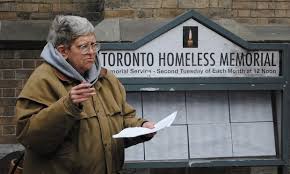
Toronto also has over 5000 people living in the streets. Many need medical and psychological help. All of them need food, safety, warmth in the winter, and to be treated with basic human dignity. Yet social programs don’t cover these needs. Homeless shelters don’t have enough beds. Hospitals don’t have residential programs for the mentally ill. Feeding and shelter are often left to ad hoc non-profit groups, as if the homeless are not every citizen’s responsibility. Or don’t we believe in the Canadian safety net anymore?
 In Toronto, the average car-based commuter spent 85 hours stuck in traffic last year. It reminds me of Manila’s infamous EDSA parking lot. Worse, for many people, using transit instead of driving its slow by comparison—never mind all the subway delays and overheated cars that go with using transit. The TTC needs more than 2.5 billion dollars, now, just for repairs. The downtown relief line, which is sorely needed, will cost a minimum of 7 billion dollars—likely more given that the Scarborough one-stop subway is going to come in at about 3 billion dollars and the Spadina extension is getting close to 1 billion dollars in cost overruns. Several more unfunded transit expansions are in the planning stages. But no one is willing to own up to any personal responsibility for paying for the transit system we need.
Just last week we learned that Toronto Public schools have a 3.5 billion dollar maintenance backlog. At city budget meetings las year city manager Peter Wallace reminded councilors that the total value of capital projects city council has approved, but for which it has not secured funding, is about 18 billion dollars. And that, presumably, doesn’t include the unapproved school, public housing, and new transit needs.
And that 18 billion dollars certainly doesn’t include a new 20-acre park over the GO tracks at Union Station, what one newspaper called a Tory “legacy” project. Don’t get me wrong, I’d love to see that park—but the way things are going, it is going to be built on the backs of commuters stuck in traffic, transit users who are more and more crowded into more and more uncomfortable trains that break down far too often, poor who can’t find affordable housing, homeless who are just plumb out of luck, and kids who go to schools that are falling apart.
Or, we could have our cake and eat it too. We could have the beautiful new park everyone is going gaga about, and we could fund all the shortfalls in housing, transit, and so on. We just have to raise taxes. For example, if over the next two or three years or five we could raise five thousand extra dollars from five million people, we’d raise twenty-five billion dollars.
Mayor Tory, let’s do it.
We both know that there is no way we’re going to raise the needed funds simply by ending the gravy train. That’s a great slogan but it’s also magical thinking. Such savings just don’t exist in today’s budget. There is no way that private industry is going to fund subways or city streets or sewer projects. The way forward so far seems to be one based on making decisions so incrementally and timidly that new challenges—the school construction backlog, for example, or the Finch Ave East Rapid Transit project—new challenges pop up far faster than we can resolve the old issues. Sure, nobody loves taxes. But putting faith in a no-tax-raises-ever philosophy is to concede our inevitable defeat when facing these problems. It’s dumber than blind faith. Why will no one say so!
Well, I will. Let’s roll out more taxes and user fees. And sure, the new money must be spent wisely, with little waste. Of course, the issues are complex, especially in that funding decisions require agreement between three levels of government. Still, there are not three levels of citizen; it's the same people who fund all three levels of government. So governments better work together better than they have up till now. The new spending is going to have to be spread over several years and include raising money via bond issues, going into other forms of debt, and also take the possibility of new needs as yet unknown into account.
Perhaps most important, new taxes need to be paid by those who can afford them, rather than by those struggling hardest to make it. The new taxes need to be graduated, and based on user fees that reflect the relative luxury of service offered. In the USA, cities tax local residents mostly based on their federal taxes due, which isn’t regressive at all. That would require rewriting Canada’s tax code, by so what?
The thing is, compared to most people, for most of history, many of us modern middle class and well-to-do citizens are living the life of Riley. We have more by way of fancy car, luxury vacations, consumer goods, clothing, lattes than any generation ever. Some of us have no idea what making a sacrifice is all about. Still, for the common good, those of us who have more must cut back a bit and step up to our communal, civic challenge.
We must pay higher taxes: for the poor, the marginalized, and for the good of the city

